
The industrial world is moving fast and 2026 is shaping up to be a breakthrough year for advanced manufacturing. One technology quietly transforming multiple sectors is the polymer electrospinning machine. Once limited to research labs and niche experiments, this equipment is now stepping into large-scale production lines across healthcare, filtration, energy storage, and smart textiles.
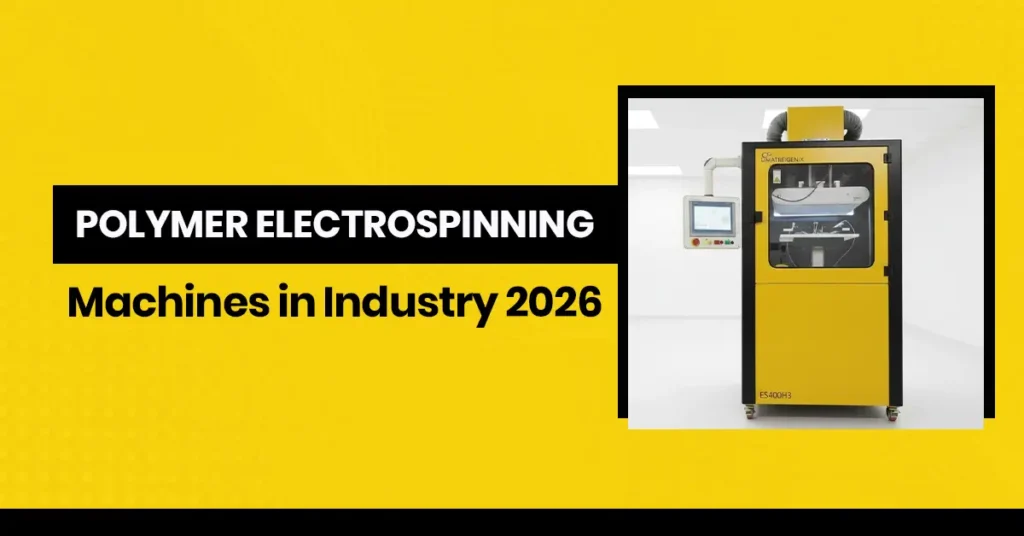
At Electrospintek, we’ve watched this shift from the front lines. In this guide, we’ll explore how polymer electrospinning machines are being used in industry in 2026, what’s driving adoption, and why businesses are investing heavily in this versatile technology.
What Is a Polymer Electrospinning Machine?
A polymer electrospinning machine is a specialized system used to create ultra-fine fibers from polymer solutions or melts using a high-voltage electric field. These fibers form nonwoven mats with unique properties like:
- High surface area
- Porous microstructure
- Lightweight yet durable texture
- Tunable fiber diameters
Unlike conventional fiber production methods, electrospinning allows manufacturers to engineer materials at the micro and nanoscale. This precision is what makes the polymer electrospinning machine so powerful for modern industry.
Why Industry Is Embracing Electrospinning in 2026
The push toward high-performance, lightweight, and multifunctional materials has accelerated adoption. In 2026, several factors are driving industrial demand:
- Customization at scale
- Advanced filtration requirements
- Medical-grade material innovation
- Sustainable material research
- Smarter, thinner, stronger textiles
Companies are no longer just experimenting they’re integrating polymer electrospinning machines directly into production workflows.
Key Industrial Applications of Polymer Electrospinning Machines
1. Medical & Biomedical Manufacturing
The healthcare sector remains one of the largest adopters of polymer electrospinning technology. In 2026, polymer electrospinning machines are widely used to produce:
- Wound dressings
- Tissue engineering scaffolds
- Drug delivery membranes
- Antimicrobial coatings
The fibrous structures created by a polymer electrospinning machine closely resemble the extracellular matrix, making them ideal for regenerative medicine. Hospitals and biotech firms value the breathability, flexibility, and controlled porosity these fibers provide.
2. Advanced Filtration Systems
Air and water filtration standards have become stricter worldwide. Industrial filters now require microscopic precision and electrospinning delivers it.
A polymer electrospinning machine can create nanofiber layers that trap ultrafine particles, bacteria, and pollutants without restricting airflow. In 2026, these machines are widely used for:
- Industrial air purification
- Cleanroom filtration
- Water treatment membranes
- HVAC upgrades
These filters are lighter, more efficient, and longer-lasting than traditional alternatives.
3. Smart Textiles and Wearable Tech
Smart fabrics are no longer futuristic concepts they’re commercial products. The polymer electrospinning machine enables manufacturers to produce ultra-thin, breathable layers for:
- Wearable sensors
- Sports performance gear
- Protective clothing
- Thermal regulation fabrics
Electrospun polymer fibers are soft yet resilient, making them ideal for garments that must flex, breathe, and endure constant motion.
4. Energy Storage and Battery Components
Energy devices in 2026 demand materials that are efficient, lightweight, and stable. Polymer electrospinning machines are used to fabricate:
- Battery separators
- Supercapacitor membranes
- Conductive fiber mats
These nanofiber structures improve ion transport while maintaining mechanical strength. This delicate balance is one reason electrospinning has become a core manufacturing process for next-generation energy systems.
Industry Trends Shaping Polymer Electrospinning Machines in 2026
Automation & AI Integration
Modern polymer electrospinning machines are smarter than ever. In 2026, AI-driven controls allow manufacturers to:
- Adjust voltage automatically
- Maintain consistent fiber diameter
- Monitor defects in real time
- Optimize polymer flow rates
This reduces human error and increases production reliability.
Scalable Multi-Nozzle Systems
One of the biggest upgrades in 2026 is scalable production. Electrospintek’s industrial-grade polymer electrospinning machine models feature:
- Multi-nozzle arrays
- High-throughput collectors
- Modular expansion designs
These systems allow manufacturers to move from pilot projects to full-scale production without reinventing their setup.
Sustainability & Eco-Conscious Polymers
Sustainability isn’t a buzzword anymore it’s a business requirement. Many companies are now using biodegradable polymers with their polymer electrospinning machine to create:
- Eco-friendly packaging membranes
- Compostable filtration layers
- Green medical materials
This shift aligns with regulatory pressure and consumer demand for cleaner production methods.
Why Electrospintek’s Machines Stand Out in 2026
Not all machines are created equal. At Electrospintek, we design polymer electrospinning machines specifically for industrial performance, not just laboratory curiosity. Our systems are built for:
- High production stability
- Precision voltage control
- Easy parameter adjustment
- Durable industrial-grade components
- User-friendly interfaces
We understand that factories don’t have time for fragile setups. Our polymer electrospinning machine solutions are designed to run long hours with minimal downtime because uptime matters.
Challenges in Industrial Electrospinning (and How They’re Solved)
While powerful, polymer electrospinning machines come with challenges:
Common Issues:
- Fiber inconsistency
- Environmental sensitivity
- Scaling difficulties
- Polymer compatibility
Modern Solutions in 2026:
- Enclosed climate-controlled chambers
- Automated parameter tuning
- Advanced nozzle designs
- Smart polymer feed systems
With the right machine and setup, these challenges become manageable rather than limiting.
The Business Case: Is a Polymer Electrospinning Machine Worth It?
For many manufacturers, investing in a polymer electrospinning machine is no longer optional it’s strategic. The ROI comes from:
- Higher material performance
- Reduced material waste
- Custom product differentiation
- Entry into high-value markets
Industries that adopt early gain a competitive edge by offering products competitors simply can’t replicate using conventional methods.
What the Future Holds Beyond 2026
Looking ahead, polymer electrospinning machines will likely evolve toward:
- Fully autonomous production lines
- Real-time fiber quality prediction
- Hybrid electrospinning + 3D printing systems
- Wider adoption in consumer goods
This technology is becoming less experimental and more foundational. The companies mastering electrospinning today will shape material innovation tomorrow.
Final Thoughts: Why 2026 Is a Defining Year
2026 marks a turning point for polymer electrospinning machines in industry. What was once a lab-scale technique has matured into a robust manufacturing solution powering medical innovation, clean energy, and smart materials.
At Electrospintek, we believe the polymer electrospinning machine is not just equipment it’s a gateway to material possibilities that didn’t exist a decade ago. If your business is thinking about future-ready manufacturing, this is the moment to lean in.