
In recent years, the demand for high-performance face masks has reshaped the filtration industry. From healthcare settings to everyday personal use, people now expect more than just a simple fabric barrier. They want comfort, breathability, and dependable protection all in one. This shift has sparked groundbreaking research in filtration materials, particularly in Electrospinning for face mask production.
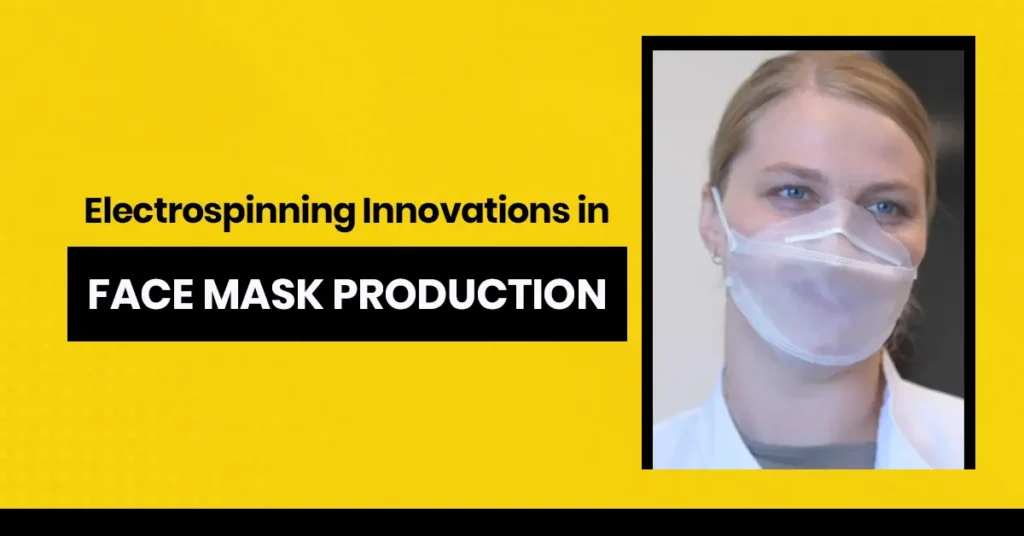
At Electrospintek, innovation is not just a buzzword. It is a commitment to refining filtration science and delivering advanced solutions that align with evolving safety standards. Among the most transformative advancements is electrospinning a technology that produces ultra-fine nanofibers capable of redefining how masks perform.
Let’s explore how this fascinating process is shaping the future of protective equipment.
Understanding Electrospinning and Why It Matters
Electrospinning is a technique that uses electrical force to draw ultra-thin fibers from polymer solutions. These fibers can be thousands of times thinner than a human hair. The result? A delicate yet highly functional web of nanofibers with remarkable filtration properties.
When applied in Electrospinning for face mask production, this method creates lightweight layers that trap microscopic particles without blocking airflow. That balance high filtration with easy breathing is the cornerstone of modern mask innovation.
Traditional melt-blown fabrics have long been used in masks, but electrospun materials introduce a new realm of precision. The fiber diameter, porosity, and layering can all be carefully controlled, leading to consistent and reliable performance.
Why Electrospun Nanofiber Face Masks Stand Out
Not all masks are created equal. What makes Electrospun Nanofiber Face Masks exceptional is their structural advantage. The ultra-fine fibers form a dense network with tiny pores, making them highly effective at capturing airborne particles such as dust, pollutants, and pathogens.
This intricate structure enables:
- Superior particle capture
- Enhanced breathability
- Reduced material bulk
- Improved comfort for long-term wear
Unlike thicker filter layers that can feel suffocating, nanofiber-based masks maintain airflow while still offering robust protection. This subtle equilibrium makes them ideal for healthcare professionals and everyday users alike.
Nanofiber Face Mask Filtration: A Technical Leap
When discussing Nanofiber Face Mask Filtration, it’s important to understand the science behind it. Nanofibers increase the surface area available for particle interception. The smaller the fiber diameter, the greater the probability that microscopic contaminants will be captured.
This leads to:
- Higher filtration efficiency for submicron particles
- Better performance against fine aerosols
- Reduced reliance on electrostatic charge retention
In simple terms, nanofibers physically block and trap particles more effectively than conventional materials. This innovation represents a meaningful upgrade in Advanced Face Mask Filtration Technology.
How Electrospinning for Face Masks Improves Breathability
One of the most common complaints about protective masks is discomfort. Heat buildup, moisture accumulation, and breathing resistance often discourage prolonged use.
Here’s where Electrospinning for Face Masks truly shines.
Because electrospun layers are incredibly thin and porous, they allow air to pass through more freely. The interconnected nanofiber structure creates a breathable membrane without sacrificing filtration strength.
Users experience:
- Less breathing resistance
- Lower humidity inside the mask
- Greater comfort during extended wear
This makes nanofiber-based masks particularly valuable in high-intensity work environments or hot climates.
Nanofiber Filtration for Masks vs. Conventional Materials
Traditional mask materials rely heavily on melt-blown polypropylene. While effective, they can lose efficiency when exposed to moisture or extended use. Additionally, their performance often depends on electrostatic charges that may degrade over time.
By contrast, Nanofiber Filtration for Masks relies more on mechanical filtration mechanisms. The ultra-fine web physically intercepts particles rather than depending solely on static charge.
Key advantages include:
- More consistent filtration over time
- Improved resistance to environmental factors
- Potential for reusable or longer-lasting designs
This reliability positions electrospun layers as a cornerstone of Next-Generation Face Mask Technology.
High-Efficiency Face Mask Materials for Modern Needs
Global health challenges have accelerated the need for High-Efficiency Face Mask Materials. Hospitals, laboratories, and industrial sectors require masks that meet strict standards without compromising comfort.
Electrospun filter layers can be engineered to meet specific performance criteria, including:
- Bacterial Filtration Efficiency (BFE)
- Particle Filtration Efficiency (PFE)
- Air permeability requirements
- Lightweight structural integrity
Because electrospinning allows for fine-tuned material design, manufacturers can adapt mask performance based on intended application. This flexibility is one of the most compelling benefits of Electrospinning for face mask production.
The Role of Electrospun Filter Media in Sustainable Design
Sustainability is another growing concern in mask manufacturing. Disposable masks contribute significantly to environmental waste. By improving filtration efficiency with thinner layers, Electrospun Filter Media reduces overall material usage.
In some cases, nanofiber layers can be integrated into reusable mask systems. With proper engineering, this opens the door to:
- Reduced material consumption
- Extended product lifespan
- Lower environmental impact
Forward-thinking companies like Electrospintek are actively exploring these possibilities, aligning innovation with ecological responsibility.
Manufacturing Precision and Scalability
One misconception about electrospinning is that it’s only suitable for laboratory environments. While it began as a research-focused process, modern advancements have enabled scalable production systems.
For large-scale Electrospinning for face mask production, automated equipment ensures:
- Uniform fiber distribution
- Consistent layer thickness
- High-throughput manufacturing
- Quality control at every stage
This scalability makes electrospinning commercially viable and increasingly competitive with conventional mask production methods.
Next-Generation Face Mask Technology Is Here
The phrase Next-Generation Face Mask Technology isn’t just marketing jargon it reflects a fundamental shift in material science. As airborne health threats and pollution concerns persist, innovation in mask filtration will continue to evolve.
Electrospun nanofiber membranes represent:
- Smarter material engineering
- Enhanced protection without added bulk
- Greater adaptability across industries
From healthcare to public transportation, and from construction sites to research labs, electrospun masks are becoming indispensable.
Why Electrospintek Leads the Innovation Curve
At Electrospintek, the focus on Electrospinning for face mask production goes beyond surface-level improvements. The company emphasizes research-driven design, precision engineering, and performance validation.
By combining technical expertise with scalable manufacturing solutions, Electrospintek delivers filtration materials that meet the demands of modern life. The result is not just another mask it’s a sophisticated filtration system built on advanced nanotechnology.
Final Thoughts
The evolution of face masks has been swift and necessary. What started as simple fabric coverings has transformed into highly engineered protective devices. Through Electrospinning for face mask production, manufacturers can now achieve unprecedented levels of filtration efficiency, breathability, and comfort.
From Electrospun Nanofiber Face Masks to Advanced Face Mask Filtration Technology, the integration of nanofibers is redefining protective standards worldwide. With continuous innovation and commitment to excellence, companies like Electrospintek are shaping a safer, smarter future.
As we look ahead, one thing is clear: electrospinning is not just enhancing face masks it is revolutionizing them.